
Annual budgets fail in dynamic markets. A plan locked in December is often irrelevant by the second quarter, and in India that obsolescence arrives faster than almost anywhere. GST adjustments, RBI rate moves, monsoon-driven demand swings, and volatile input costs shift your financial foundations mid-year. A static baseline cannot absorb those shocks. A 12-month rolling forecast can — because it never stops moving. This guide explains what a rolling forecast is, the measurable gains it delivers, and a practical five-step path to build one that actually works.
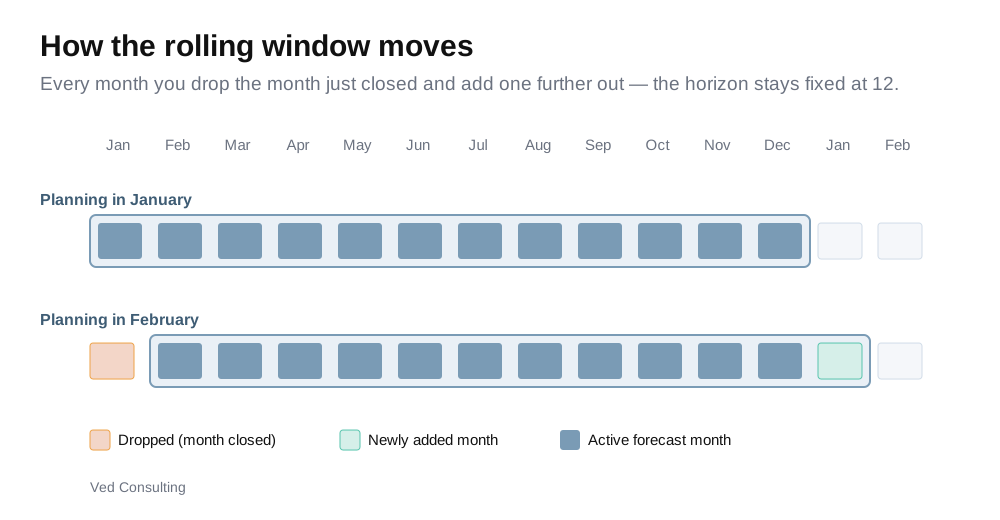
A rolling forecast always looks exactly 12 months ahead. Each month, as one month closes, you drop it and add a new month at the far end — so the horizon never shrinks toward an arbitrary year-end. Instead of a fixed target set once a year, you maintain a continuously refreshed window of visibility built on the latest actuals. The annual budget asks “how did we do against the plan?” The rolling forecast asks the more useful question: “given what we now know, where are we heading over the next year?”
Fixed budgets rely on assumptions that decay quickly. Most Indian firms find their annual plan out of date within six months as sector demand shifts and input prices move. MSMEs are especially exposed: delayed receivables, tightening credit, and thin working-capital buffers can turn a healthy plan into a cash crunch in weeks. A rolling forecast incorporates these macro variables in real time, letting you adjust assumptions continuously rather than defending a number that reality has already overtaken.
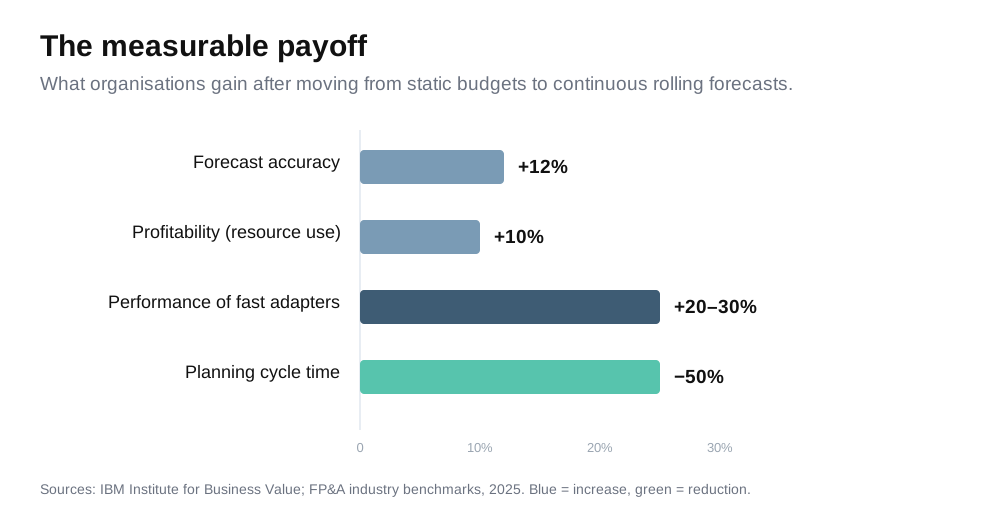
Continuous forecasting is not just tidier — it performs better. Research from the IBM Institute for Business Value finds rolling forecasts deliver roughly 12% greater accuracy than traditional budgets while cutting budget preparation time by about half. Better resource allocation lifts profitability by around 10%, and organisations that adapt quickly to changing conditions post 20–30% stronger financial performance than those anchored to annual cycles.
Rolling forecasts are the single best predictor of CFO satisfaction with the planning process.
McKinsey
| Dimension | Static annual budget | 12-month rolling forecast |
|---|---|---|
| Horizon | Fixed to year-end; shrinks each month | Always 12 months ahead |
| Update frequency | Once a year | Every month |
| Basis | Prior-year assumptions | Latest actuals plus business drivers |
| Reaction to shocks | Wait for next planning cycle | Within the same month |
| Effort profile | One large annual crunch | Small, steady monthly cadence |
| Best suited to | Stable environments | Volatile, fast-moving markets |
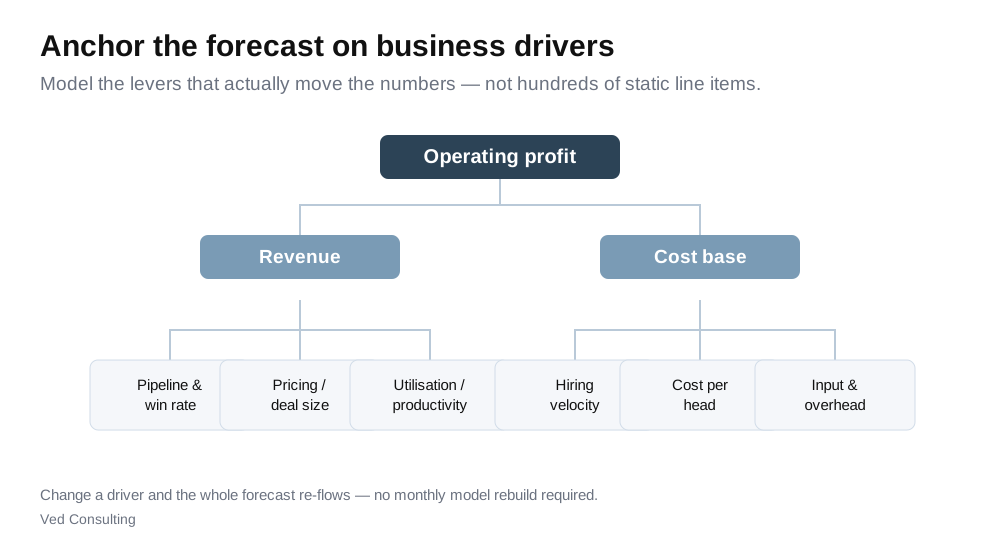
Operational effectiveness requires a shift in method. Stop forecasting hundreds of static line items and anchor projections on the handful of drivers that actually move the numbers — sales pipeline and win rate, pricing and deal size, utilisation, hiring velocity, and cost per head. This matters acutely in India, where sectoral growth diverges sharply: IT services may face margin pressure while infrastructure sees revenue acceleration. With a driver-based model you can simulate a cost-inflation spike or an execution delay in minutes, and the whole forecast re-flows — no monthly rebuild of the entire model.
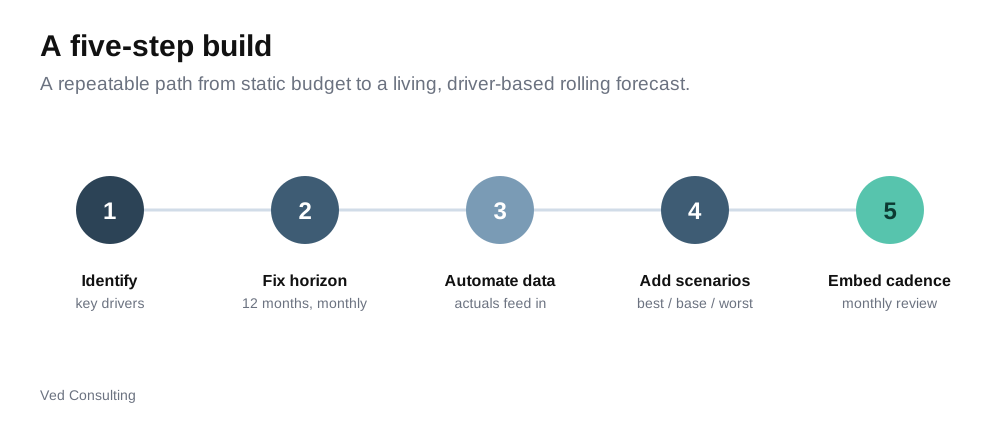
Roughly one in five rolling-forecast rollouts stalls — implementation matters as much as method. The usual failure modes are avoidable: over-engineering the model with too many drivers, leaving it trapped in fragile manual spreadsheets that do not scale, forecasting at a level of detail no one uses, and treating it as a one-off finance exercise rather than a standing monthly routine. Start lean, automate the data, and protect the cadence.
Spreadsheets can prove the concept, but they rarely sustain it — version sprawl and manual errors compound as data grows. Purpose-built FP&A and planning platforms enforce frequency, connect to source systems, and make scenario analysis and driver changes fast and reliable. The direction of travel is clear: most finance leaders now expect greater reliance on data analytics and scenario planning, with finance operating as an embedded strategic partner rather than a reporting function.
A rolling forecast positions you to respond to liquidity pressures, reallocate resources under uncertainty, and keep strategy and execution aligned month to month. That is the agility modern market leadership demands. Begin by identifying your primary operational drivers, build a repeatable monthly cadence, and use technology to strip out manual data entry. The organisations that plan continuously are the ones that adapt fastest — and in India’s markets, speed of adaptation is the edge.
Posted by the Research Team at Ved Consulting. Ved Consulting helps Indian businesses design driver-based rolling forecasts and modern FP&A processes.
Connect with us on LinkedIn: https://www.linkedin.com/company/vedconsulting/