By Amiya Satpathy — Managing Partner, Ved Consulting
When leaders talk about culture, the conversation often shifts to values, engagement surveys, employee events, or HR initiatives. But culture is much more fundamental than that.
Culture is the operating system of an organization.
Just as an operating system determines how every application on a computer functions, organizational culture determines how decisions are made, how people collaborate, how conflicts are resolved, and how work gets done every single day.
The strongest organizations don’t leave culture to chance. They design it into the way the business operates.
Consider two companies with similar strategies, products, and market opportunities. One consistently executes faster, solves problems collaboratively, and adapts to change with confidence. The other struggles with silos, delayed decisions, and internal friction.
The difference is rarely strategy. It’s the operating system beneath it.
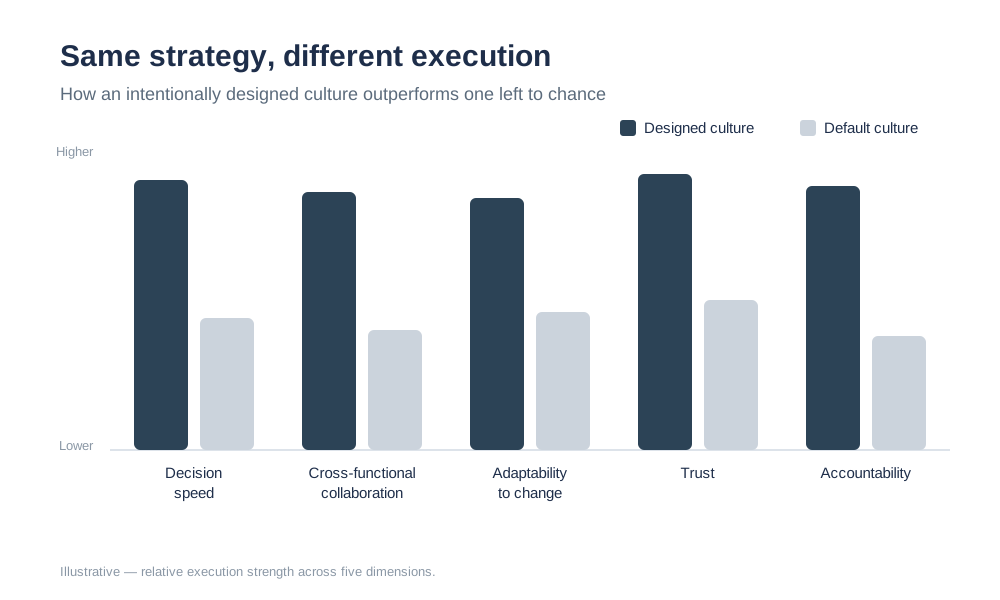
A strong organizational culture creates clarity in five critical areas:
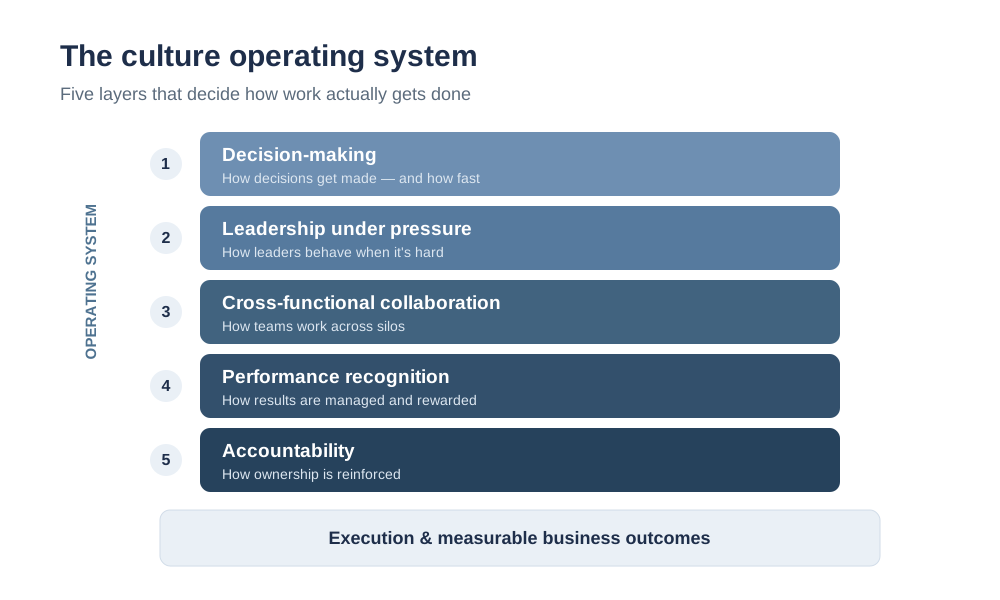
When these elements are consistent, organizations move faster with fewer escalations and greater trust. When they are absent, every decision requires intervention, every disagreement becomes a conflict, and execution slows despite having capable people.
This is why culture cannot be delegated solely to HR. HR plays a vital role in enabling and strengthening culture, but culture is created every day by leadership decisions, management behaviours, operating rhythms, and the standards that leaders choose to reward — or tolerate.
Every business already has a culture. The only question is whether it has been intentionally designed or accidentally developed.
In an era of distributed teams, rapid growth, and constant change, culture is no longer a “soft” topic. It is an execution advantage.
Because while strategy defines where an organization wants to go, culture determines whether it gets there.
The most successful companies don’t treat culture as a people initiative. They treat it as the operating system that powers every business outcome.