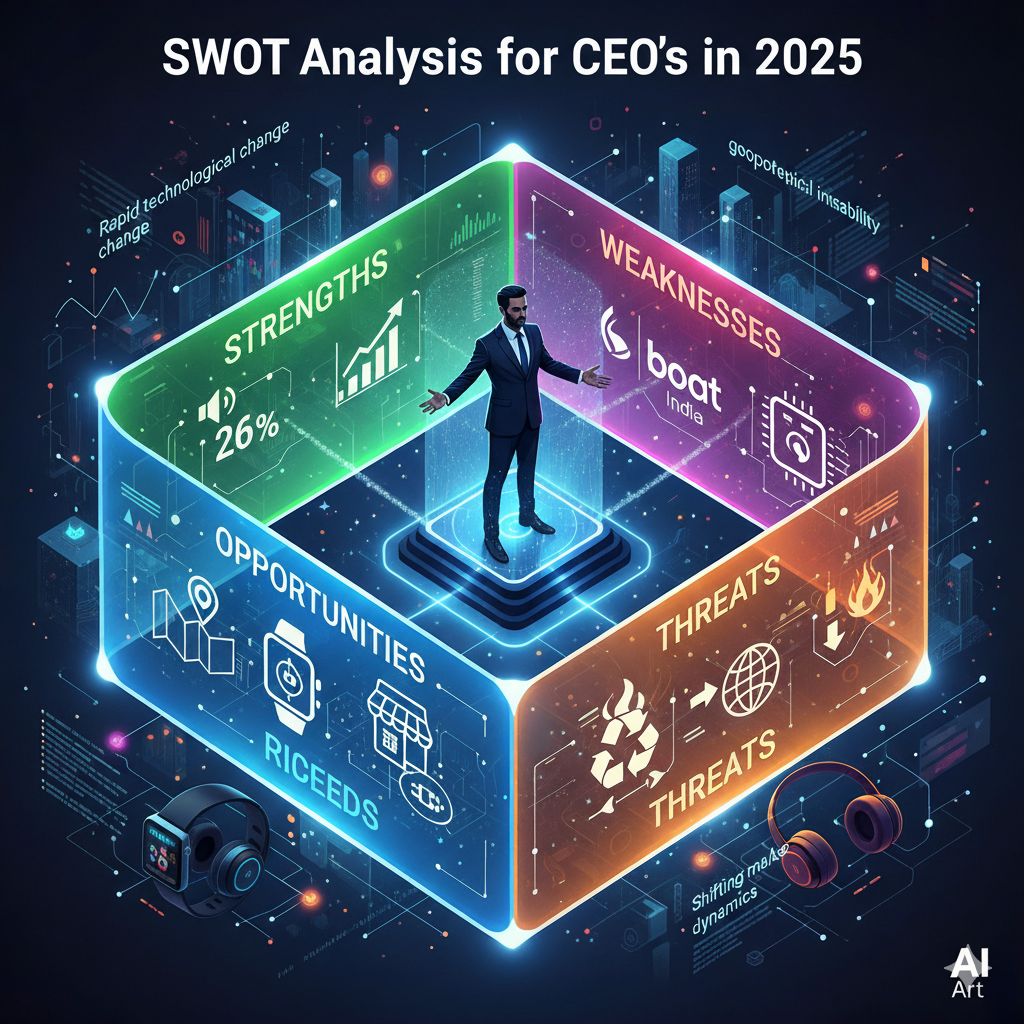
In 2025, CEOs face a complex, connected, and unpredictable business environment. Rapid technological change, geopolitical instability, and shifting market dynamics make leadership more challenging than ever. In this context, SWOT analysis remains a critical tool for leadership development, performance coaching, and business strategy alignment.
A well-executed SWOT (Strengths, Weaknesses, Opportunities, Threats) not only reflects organizational realities but also connects strategy, skill-building, and capability development.
Why SWOT Analysis Matters for Modern Leaders
Many leaders confuse activity with alignment—implementing projects, adopting technologies, and entering new markets without understanding internal strengths and weaknesses. A strategic SWOT analysis at the leadership level can identify hidden challenges before they escalate.
Key Questions Every CEO Should Ask Quarterly:
- What are our core strengths compared to competitors?
- Where are internal weaknesses affecting growth?
- Which external trends could accelerate or hinder progress?
Integrating SWOT with leadership development programs, performance coaching, and capability-building initiatives turns it into a continuous leadership practice, rather than a static exercise.
Mini Case Study: boAt India and SWOT in Action
Overview of boAt India
boAt, founded in 2014 by Aman Gupta and Sameer Mehta, has rapidly ascended to become India’s leading audio and wearables brand. Known for its stylish, affordable, and high-quality products, boAt has disrupted a market traditionally dominated by global giants like Sony and JBL (blog.privatecircle.co).
boAt’s Financial Performance: A Snapshot
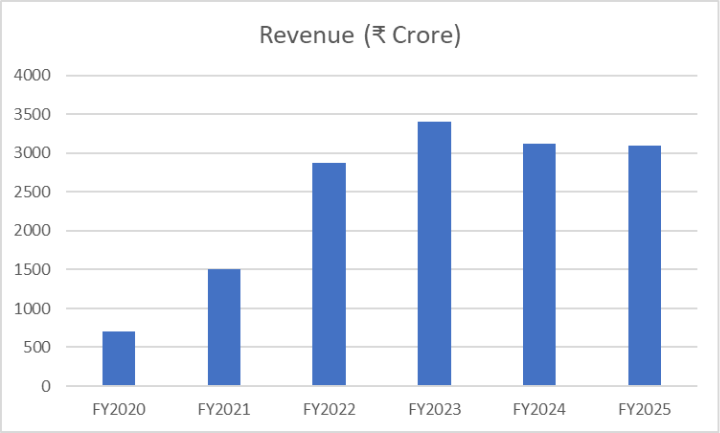
Since its founding, boAt has experienced significant financial growth, punctuated by occasional dips:
- FY2020: Revenue of ₹704 crore with a profit of ₹48.85 crore (unlistedzone.com)
- FY2021: Revenue of ₹1,500 crore, marking substantial growth
- FY2022: Revenue of ₹2,873 crore; profit declined by 20%
- FY2023: Revenue of ₹3,403 crore; profit figures not specified
- FY2024: Revenue of ₹3,122 crore; net loss of ₹54 crore (entrackr.com)
- FY2025: Revenue of ₹3,089.6 crore; net profit of ₹64.2 crore, indicating a strong recovery (livemint.com)
This trajectory demonstrates how strategic alignment, market responsiveness, and continuous product innovation can support both growth and resilience in volatile markets.
Product Line Evolution and Strategic Shift
boAt began by offering affordable, design-led audio accessories, gradually expanding into wireless earbuds, headphones, speakers, smartwatches, and grooming products—solidifying its identity as a lifestyle-driven technology brand (Startuptalky).
Over the years, the company evolved from selling functional gadgets to building a youth-centric lifestyle label, connecting with India’s digital-first consumers through sports partnerships, influencer campaigns, and music collaborations (PrivateCircle Blog).
By FY2025, boAt had built a robust product ecosystem with 50+ wireless earbud models and nearly 20 headsets, supported by local design and innovation, as nearly 60% of new products were conceptualized in India (DigitalCourseAI). This shift strengthened supply chain efficiency and brand authenticity under the Make in India movement.
To counter rising competition in the entry-level audio market, boAt strategically moved upmarket with the introduction of its Lunar Series smartwatches in 2023. The range—including Lunar Connect Pro and Lunar Discovery—offered advanced health tracking and premium design, helping boAt tap into higher-margin consumer segments (Entrackr).
This pivot not only diversified revenue streams but also contributed to boAt’s return to profitability in FY2025, reflecting how innovation in premium categories can enhance both brand equity and financial resilience (Livemint).
boAt’s evolution from budget-friendly audio accessories to aspirational tech products illustrates how strategic product innovation and market repositioning can drive sustainable growth—even in a competitive consumer electronics landscape.
SWOT Analysis of boAt Highlights (2025)
Strengths
- Brand Identity and Market Share: boAt holds over 26% share in the Indian wireless audio segment (startuptalky.com)
- Product Range and Affordability: Offers over 50 wireless earbuds and nearly 20 headsets, catering to diverse consumer preferences
- Innovation and Local Manufacturing: 60% of new products designed in India, fostering local innovation (digitalcourseai.in)
- Strong Online Presence: Targeting young consumers through digital marketing and influencer collaborations
Weaknesses
- Dependence on online sales channels
- Limited presence in premium/professional audio markets
- Reliance on imported manufacturing components
Opportunities
- Expansion into Wearables: The Storm Call 2 smartwatch sold over 1 million units in Q1 2025 (digitalcourseai.in)
- Offline Retail Growth: Over 900 retail stores across Tier 1 and Tier 2 cities
- Sustainability Initiatives: “boAt Green” initiative encourages device recycling
- International Expansion: Entry into the UAE market with full product range (timesofindia.indiatimes.com)
Threats
- Competition from global tech brands and Indian D2C startups
- Supply-chain instability
- Margin pressure from aggressive pricing
Lessons for Leadership
boAt’s strategic focus on leveraging internal strengths—such as rapid innovation cycles, strong brand identity, and affordability—has enabled it to capitalize on external opportunities like the growing wearables market and international expansion. Regular SWOT analyses have allowed boAt’s leadership to proactively address weaknesses and threats, ensuring sustained growth and market leadership.
For management consultants and performance coaches, SWOT is more than a strategy tool—it’s a framework for building leadership capability:
- Strengths: Highlight leadership assets, strategic focus, and organizational culture
- Weaknesses: Reveal skill gaps, governance issues, and mindset barriers
- Opportunities: Guide where learning and development should be focused
- Threats: Encourage proactive planning for crises and building organizational resilience
Viewed through a leadership lens, SWOT becomes both a strategy alignment exercise and a leadership growth opportunity.
Conclusion
In a volatile and fast-changing business landscape, SWOT analysis is essential for leadership and strategy, not optional. Companies like boAt India demonstrate that aligning strengths with opportunities, addressing weaknesses, and preparing for threats accelerates growth. For CEOs, consultants, and leadership teams, the takeaway is clear: SWOT is not just a report—it is an ongoing practice for organizational success and leadership development.
Posted by the Research Team at Ved Consulting.Connect with us on LinkedIn: https://www.linkedin.com/company/vedconsulting/