
India's factories are changing faster than ever before. Digital technologies now sit at the heart of that change.
Sensors, software and smart machines are reshaping how Indian products get made. This shift is not a distant promise. It is already visible on shop floors across the country. Manufacturers use live data to cut waste and lift output. They connect machines to spot failures before they happen. The result is a more agile and competitive sector.
This guide explains what is driving the change. It covers the core technologies, the measurable gains and the road ahead for Indian manufacturers.
Table of contents
- The digital shift in Indian manufacturing
- Core digital technologies transforming factories
- Business impact and measurable gains
- What it means for Indian MSMEs
- The government push behind Industry 4.0
- Key challenges to adoption
- A practical roadmap for manufacturers
- Frequently asked questions
- Conclusion
The digital shift in Indian manufacturing
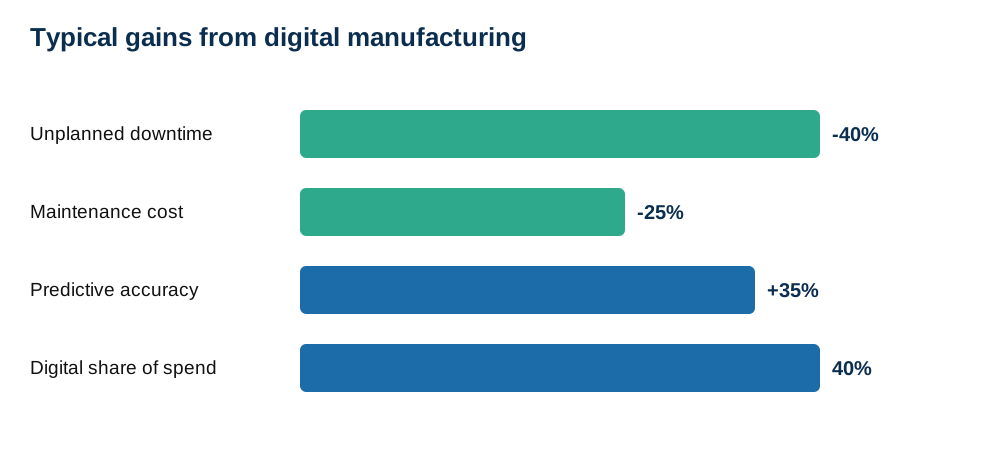
Indian manufacturing is entering a decisive digital phase. Investment in factory technology is rising quickly. Digital tools are set to reach around 40 percent of manufacturing spending. That is up from about 20 percent in 2021, as noted by NASSCOM.
The market numbers show real momentum. India's smart factory market stood near 7.7 billion dollars in 2025. Analysts expect it to reach about 17 billion dollars by 2032. The industrial IoT market is growing on a similar curve.
Policy goals add further weight to this trend. The government wants manufacturing to reach 25 percent of GDP. More than half of Indian manufacturers already use AI and analytics tools. Digital capability is now core to competitiveness, not an optional extra.
Core digital technologies transforming factories
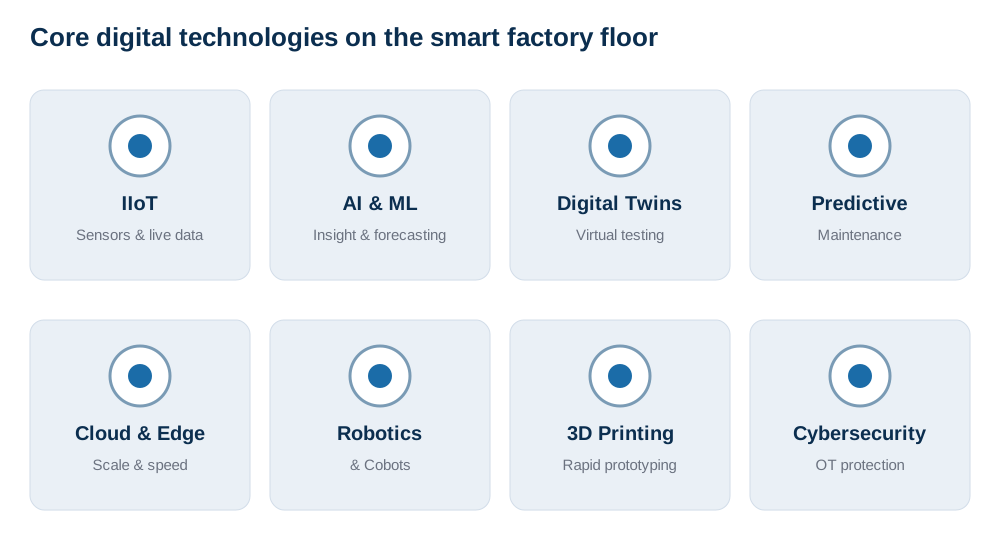
Several technologies work together to create the modern smart factory. Each one solves a specific problem on the shop floor. Together they form a connected, data-driven production system.
Industrial Internet of Things (IIoT)
IIoT sensors sit on machines, tools and products. They stream live data on temperature, vibration, speed and output. This visibility is the foundation of every smart factory. Managers can finally see the whole plant in real time.
Artificial intelligence and machine learning
AI models turn raw factory data into clear decisions. They spot quality defects that humans often miss. They also forecast demand and optimise schedules. Machine learning sharpens these predictions as more data arrives.
Digital twins
A digital twin is a live virtual copy of a machine or plant. Engineers test changes on the twin before touching the real line. This lowers risk and speeds up improvement. It also supports smarter maintenance planning.
Predictive maintenance
Predictive maintenance uses sensor data to flag failures early. Teams then fix parts before they break down. One documented smart plant cut unplanned downtime by about 40 percent. It also reduced maintenance costs by roughly 25 percent.
Cloud and edge computing
Cloud platforms store and analyse data at scale. Edge devices process urgent data right on the shop floor. Together they balance depth and speed. Hybrid setups now suit most Indian factories.
Robotics and collaborative robots
Robots handle repetitive and heavy tasks with high precision. Collaborative robots, known as cobots, work safely beside people. They raise output and improve worker safety. Adoption is climbing across auto and electronics plants.
Additive manufacturing (3D printing)
3D printing builds parts layer by layer from digital files. It speeds up prototyping and short production runs. It also cuts tooling costs for complex parts. Indian firms use it for tooling, spares and design.
Industrial cybersecurity
Connected machines create new security risks. Attackers can target operational technology, not just office systems. Strong cybersecurity protects uptime and trade secrets. Many firms now treat it as a top priority.
Business impact and measurable gains
Digital technology delivers results that leaders can measure. The gains show up in cost, quality, speed and safety. The chart and table below summarise the most common outcomes.
| Technology | What it does | Typical impact |
|---|---|---|
| IIoT and analytics | Live machine monitoring | Less downtime and faster response |
| Predictive maintenance | Early fault detection | Up to 40 percent lower unplanned downtime |
| Digital twin | Virtual testing of changes | Around 35 percent better predictive accuracy |
| AI quality checks | Automated inspection | Fewer defects and less rework |
| Automation and cobots | Consistent, safe output | Higher productivity and safety |
These gains compound over time. A connected plant learns from its own data. Small improvements add up to a strong cost advantage. That advantage is hard for rivals to copy quickly.
What it means for Indian MSMEs
MSMEs form the backbone of Indian manufacturing. They contributed about 35 percent of manufacturing gross value added in FY24. India has more than 7.4 crore registered MSMEs. Their digital choices shape the whole sector.
Confidence is rising fast among smaller firms. Recent surveys show most MSMEs feel at ease using digital tools. Around 55 percent are actively exploring AI. Many are also strengthening their cybersecurity posture.
Affordable cloud tools have lowered the entry barrier. A small unit can start with a few sensors and a dashboard. It can then scale as clear returns appear. This step-by-step path suits tight MSME budgets.
The government push behind Industry 4.0
Public policy is a major driver of this shift. The Make in India programme promotes local, modern production. The Production Linked Incentive scheme rewards scale and quality. These schemes pull private investment into advanced plants.
The results are visible in the data. By August 2025, PLI had drawn about 1.46 lakh crore rupees in investment. It supported production worth several lakh crore rupees. It also helped create close to a million jobs.
Broader digital goals reinforce this trend. Programmes like Digital India and Samarth Udyog support factory modernisation. Government studies suggest AI could add trillions of dollars to the economy by 2035. Manufacturing stands to gain a large share of that value.
Key challenges to adoption
The path to digital maturity is not always smooth. Several barriers slow adoption, especially for smaller firms. Awareness of the real benefits is the first gap.
Skilled talent remains in short supply. Factories need people who understand both machines and data. Upfront cost is another common concern. Legacy equipment can be hard to connect to new systems.
Cybersecurity adds a further layer of caution. A connected plant needs strong protection from day one. The good news is that these barriers are falling. Cheaper tools and better training make adoption easier each year.
A practical roadmap for manufacturers
At Ved Consulting, we guide manufacturers through this change. A clear roadmap prevents wasted spending. It also builds momentum through early wins. The following steps work well for Indian plants.
Start with a focused assessment of your operations. Find the process that loses the most time or money. Run a small pilot on that single problem first. Then measure the result against a clear baseline.
Scale what works and drop what does not. Invest in training so your teams own the tools. Build security into every new connection. Review progress often and adjust the plan. This disciplined approach turns technology into real profit.
Frequently asked questions
Which digital technologies matter most for Indian manufacturers?
IIoT, AI and predictive maintenance usually deliver the fastest returns. They improve visibility, quality and uptime. Most plants start here before adding digital twins and robotics.
Can small factories afford digital transformation?
Yes, in most cases. Cloud tools and low-cost sensors make a small start possible. Firms can scale spending as returns appear. This lowers risk for MSMEs.
How does digital technology improve factory output?
It gives managers live data on every machine. Teams then cut downtime and reduce defects. Automation keeps output steady and predictable. Together these effects lift overall productivity.
What is the biggest barrier to adoption in India?
A shortage of skilled talent is a leading barrier. Cost and legacy systems also slow progress. Focused training and phased pilots help overcome these issues.
Conclusion
Digital technology is reshaping Indian manufacturing for good. The gains in cost, quality and speed are clear. Firms that move early will lead their markets. Those that wait risk falling behind.
Ready to modernise your plant?
A focused, step-by-step plan reduces both risk and cost. Explore our consulting services or contact our team to get started.
You may also like our guides on lean transformation for CEOs, the AI race for Indian CEOs and how strategic consulting drives growth.
{"@context":"https://schema.org","@type":"FAQPage","mainEntity":[ {"@type":"Question","name":"Which digital technologies matter most for Indian manufacturers?","acceptedAnswer":{"@type":"Answer","text":"IIoT, AI and predictive maintenance usually deliver the fastest returns. They improve visibility, quality and uptime. Most plants start here before adding digital twins and robotics."}}, {"@type":"Question","name":"Can small factories afford digital transformation?","acceptedAnswer":{"@type":"Answer","text":"Yes, in most cases. Cloud tools and low-cost sensors make a small start possible. Firms can scale spending as returns appear. This lowers risk for MSMEs."}}, {"@type":"Question","name":"How does digital technology improve factory output?","acceptedAnswer":{"@type":"Answer","text":"It gives managers live data on every machine. Teams then cut downtime and reduce defects. Automation keeps output steady and predictable, which lifts overall productivity."}}, {"@type":"Question","name":"What is the biggest barrier to adoption in India?","acceptedAnswer":{"@type":"Answer","text":"A shortage of skilled talent is a leading barrier. Cost and legacy systems also slow progress. Focused training and phased pilots help overcome these issues."}} ]}