

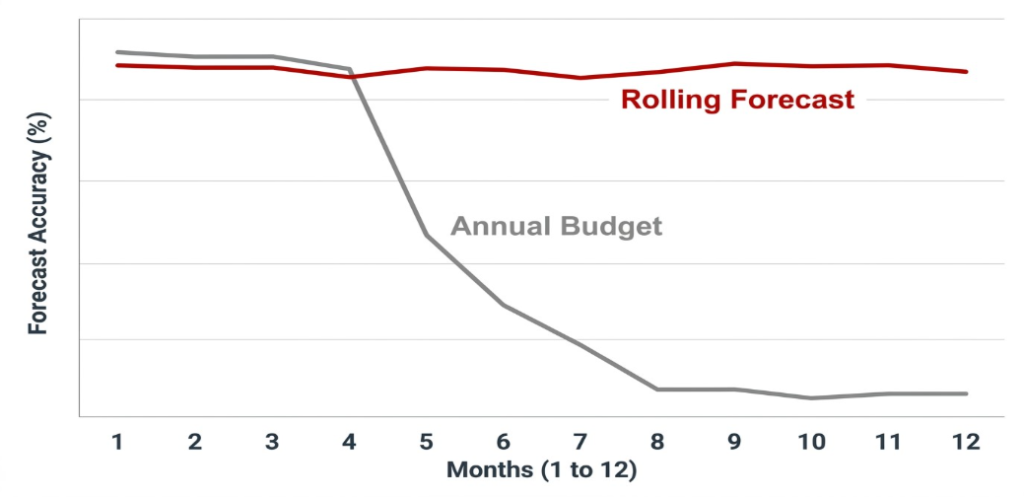
Annual budgets fail in dynamic markets. Static plans lose relevance by the second quarter. In India, structural volatility drives this obsolescence. GST compliance adjustments and RBI interest rate changes shift your financial foundations. Traditional baselines cannot account for these rapid swings. You must transition to a 12-month rolling forecast system to maintain strategic control.
Why Traditional Planning Fails in India
Fixed budgets rely on outdated assumptions. Most Indian firms find their annual plans irrelevant within six months. Sector-specific demand swings and input cost fluctuations disrupt long-term projections. MSMEs face extreme sensitivity to delayed receivables and credit condition shifts. A rolling forecast incorporates these macro variables in real time. It allows you to adjust assumptions continuously. You replace fixed baselines with a moving window of visibility.
Quantifiable Performance Gains
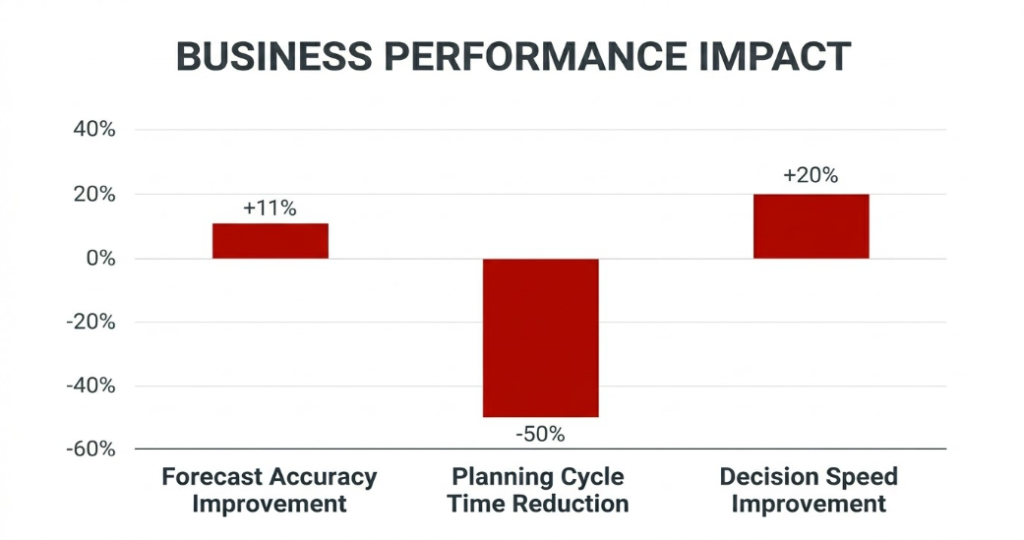
Data proves the efficacy of continuous forecasting. Organizations using rolling forecasts achieve 10 to 12% higher forecast accuracy. You can reduce your planning cycle time by up to 50%. These gains stem from replacing static goals with updated actuals. Faster decision cycles result from this shift. You allocate capital with higher efficiency because your projections reflect real business momentum.
Implement Driver-Based Modelling
Operational effectiveness requires a shift in methodology. Stop focusing on line-item projections. Anchor your forecasts on specific business drivers. High-performing organizations track sales pipeline conversion, pricing, utilization, and hiring velocity. This approach is critical for the Indian market. Sectoral growth in India often diverges sharply. IT services face margin pressures while infrastructure firms see revenue acceleration. Driver-based models allow you to simulate these shocks. You can assess the impact of cost inflation or execution delays quickly. You do not need to rebuild the entire financial model each month.
Overcoming Implementation Hurdles
Many Indian firms struggle with the transition. Reliance on manual spreadsheets creates errors. These systems do not scale with increasing data complexity. You must embed the rolling forecast into your monthly management routine. It is a core management capability. It is not a simple finance project. Automated systems ensure frequency and reliability.
Strategic Alignment
Rolling forecasts position you to respond to liquidity pressures. You optimize resource allocation in uncertain environments. You maintain alignment between strategy and execution. This system provides the agility required for modern market leadership. Start by identifying your primary operational drivers. Build a repeatable monthly cadence. Use technology to reduce manual data entry.
Posted by the Research Team at Ved Consulting.
Connect with us on LinkedIn: https://www.linkedin.com/company/vedconsulting/