

Growth today is harder to achieve—and even harder to sustain. Markets are becoming more competitive, customer expectations are evolving rapidly, and new digital channels are constantly reshaping how companies reach buyers. In this environment, many organizations discover that the go-to-market strategy that worked during early growth does not scale effectively.
What works at $5 million in revenue often breaks at $50 million. Customer acquisition costs rise, sales cycles lengthen, and growth becomes unpredictable. The issue is rarely demand—it is the lack of a scalable GTM model.
Companies that achieve market leadership treat their go-to-market strategy framework as a strategic capability rather than a set of sales tactics. They build systems that create revenue predictability, support strategic market expansion, and sustain long-term growth.
This article outlines four strategic moves leaders should focus on when building a scalable go-to-market strategy.
1. Start with Strategic Positioning, Not Channels
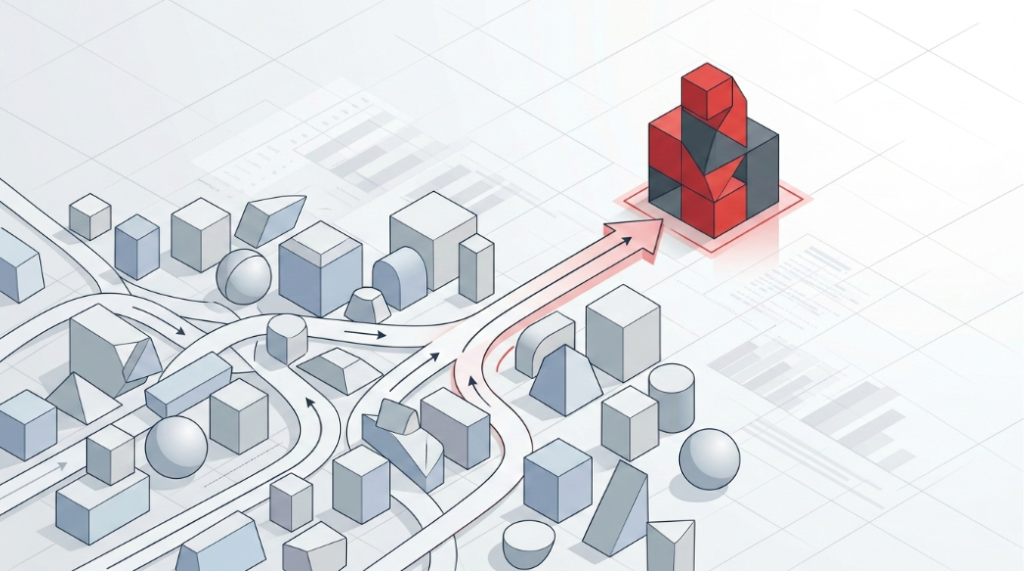
Many companies begin designing their go-to-market strategy by deciding where to sell—digital ads, enterprise sales teams, or partnerships. But scalable growth begins with strategic positioning, not distribution.
In crowded markets, customers choose companies that clearly communicate their value. Without clear competitive differentiation, even strong products become commodities.
The companies that build category leadership are often those that define the narrative of the market itself. When positioning is clear, marketing becomes more effective, sales cycles shorten, and customer acquisition becomes more efficient.
What Leaders Can Do
• Define a Clear Market Position
Clarify the problem your company solves and why your approach is fundamentally different from competitors.
• Focus on a Core Customer Segment
Winning one high-value segment creates credibility and momentum for broader strategic market expansion.
• Align Product and Messaging
Ensure product features, pricing, and messaging reinforce the same strategic positioning.
2. Build a Repeatable Customer Acquisition Engine

Early growth often comes from experimentation—founder-led sales, opportunistic deals, or ad-hoc partnerships. But sustainable growth requires a repeatable customer acquisition strategy.
A strong B2B go-to-market strategy integrates marketing, sales, and customer success into a unified growth engine. Demand generation creates pipeline, sales converts opportunities, and customer success expands lifetime value.
Without this integration, companies struggle with inconsistent pipeline and rising acquisition costs.
What Leaders Can Do
• Integrate Marketing and Sales Systems
Treat marketing and sales as a unified revenue engine rather than separate departments.
• Track Customer Acquisition Economics
Measure CAC, LTV, and conversion rates to ensure a scalable revenue model.
• Invest in Scalable Demand Channels
Content leadership, digital marketing, and ecosystem partnerships often scale faster than purely outbound sales.
3. Design the GTM Model for Expansion
Many startup go-to-market strategies are designed for initial traction, not long-term scale. As companies grow, they must expand across new segments, products, and geographies.
Without a structured GTM strategy for scaling companies, expansion creates operational friction. Sales teams struggle to manage multiple offerings, messaging becomes inconsistent, and pricing structures lose clarity.
A scalable go-to-market strategy framework should allow organizations to grow without rebuilding their commercial model each time they enter a new market.
What Leaders Can Do
• Standardize Core GTM Processes
Define clear playbooks for lead generation, sales qualification, and onboarding.
• Develop Strategic Partnerships
Alliances with distributors and technology partners can accelerate market entry strategy execution.
• Balance Global Consistency with Local Adaptation
Maintain a strong central strategy while allowing regional teams to adapt execution.
4. Build Revenue Predictability into the Organization

Scaling a go-to-market strategy is not just a sales challenge—it is an organizational one. As companies grow, founder-driven selling must evolve into a structured commercial system.
Leaders increasingly view revenue predictability as a competitive advantage. Organizations that can forecast demand accurately allocate resources more effectively and scale faster.
The strongest scalable GTM models rely on clear ownership, strong data systems, and disciplined execution.
What Leaders Can Do
• Clarify Revenue Ownership
Define accountability across marketing, sales, and customer success teams.
• Adopt Data-Driven Decision Making
Use CRM and analytics systems to track pipeline health and revenue performance.
• Create Product-Market Feedback Loops
Insights from customers should continuously inform product development and messaging.
Conclusion
Building a scalable go-to-market strategy is essential for companies aiming to achieve sustainable growth and long-term market leadership. Early traction may come from experimentation, but scale requires structure.
Organizations that succeed focus on clear strategic positioning, a repeatable customer acquisition strategy, expansion-ready GTM frameworks, and strong revenue predictability.
In today’s competitive markets, growth rarely happens by chance. It is built through deliberate strategy and disciplined execution.
Companies that invest early in a scalable go-to-market strategy will not only accelerate growth—they will define the competitive landscape of their industry.
Posted by the Research Team at Ved Consulting.
Connect with us on LinkedIn: https://www.linkedin.com/company/vedconsulting/