In 2025, CEOs operate in a business environment that is complex, connected, and unpredictable. Rapid technological change, geopolitical instability, and shifting market dynamics make leadership harder than ever. In that context, SWOT analysis — Strengths, Weaknesses, Opportunities, Threats — remains one of the most practical tools a leader has, provided it is treated as a living leadership practice rather than a slide filled in once a year.
Why SWOT still matters for modern leaders
Many leaders confuse activity with alignment — launching projects, adopting technologies, and entering markets without a clear read on internal strengths and weaknesses. A disciplined SWOT at the leadership level surfaces hidden challenges before they escalate. The power of the framework is its simplicity: two internal dimensions you can act on directly, and two external ones you must anticipate.
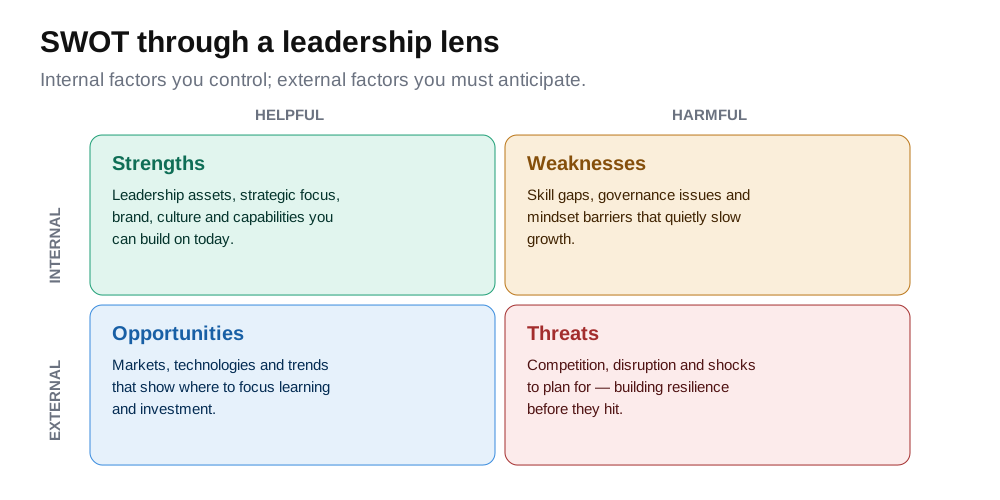
Used well, it becomes a quarterly discipline. Three questions every CEO should revisit: What are our core strengths relative to competitors? Where are internal weaknesses quietly affecting growth? And which external trends could accelerate — or derail — our progress? Tie the answers to leadership development and capability-building, and SWOT stops being a static exercise and becomes a continuous practice.
Case study: boAt India
boAt, founded in 2014 by Aman Gupta and Sameer Mehta, has become India’s leading audio and wearables brand. With stylish, affordable, high-quality products, it disrupted a market long dominated by global giants like Sony and JBL — and it offers a clear, current illustration of SWOT thinking in action.
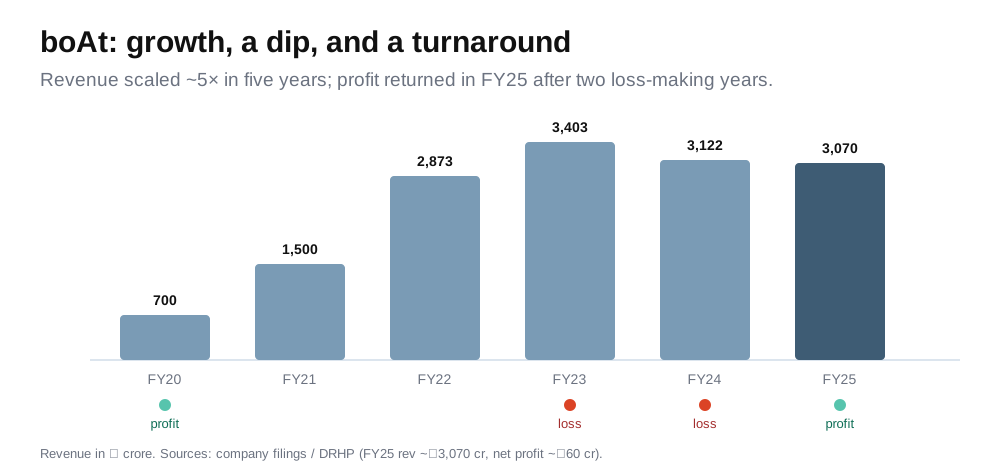
The trajectory tells the story. Revenue scaled roughly five-fold in five years, from about ₹700 crore in FY2020 to ₹3,403 crore in FY2023. Then came the test: revenue dipped and the company posted net losses in FY2023 and FY2024. In FY2025 boAt reported revenue of around ₹3,070 crore and returned to profit at about ₹60 crore — a genuine turnaround. It held roughly a 26% value share (34% by volume) and stayed the number-one branded audio player in India for a fifth straight year.
Behind the numbers is a strategic shift. boAt moved from selling functional gadgets to building a youth-focused lifestyle brand, then countered entry-level margin pressure by moving upmarket — the Lunar series of smartwatches opened higher-margin segments. Nearly 60% of new products are now designed in India, strengthening both supply-chain control and brand authenticity under Make in India. That pivot is a large part of why profitability returned.
boAt’s SWOT, at a glance
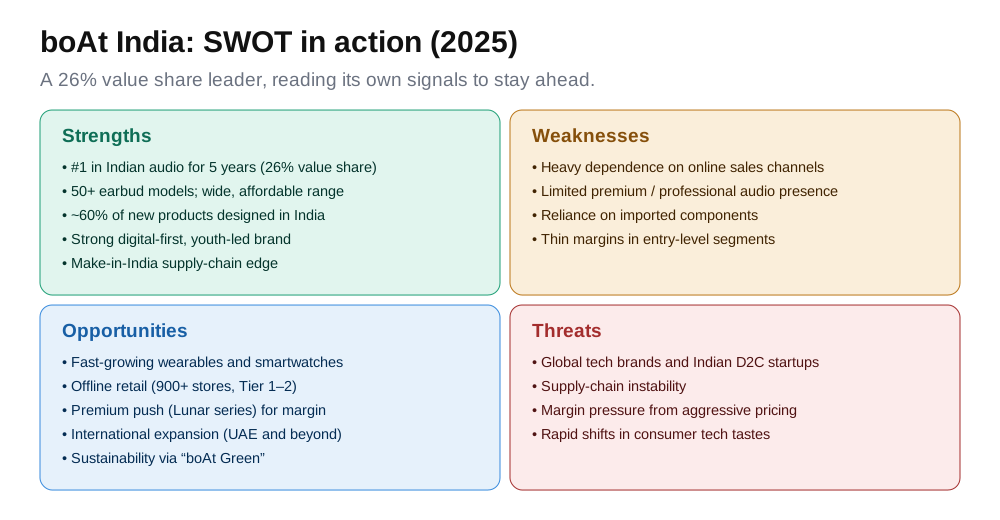
boAt’s strength lies in brand, range, affordability, and local design; its weaknesses in channel concentration, a light premium presence, and imported components. The opportunities — wearables, offline retail, premiumisation, international markets, and sustainability — are exactly where it is now investing. The threats — global brands, agile D2C startups, supply-chain shocks, and price-driven margin pressure — are the risks its leadership actively manages. Regular SWOT reviews are what let boAt convert strengths into moves against opportunities, rather than being caught out by threats.
Lessons for leadership
For CEOs, consultants, and coaches, SWOT is more than a strategy tool — it is a framework for building leadership capability. Strengths highlight leadership assets, strategic focus, and culture. Weaknesses reveal skill gaps, governance issues, and mindset barriers. Opportunities guide where learning and development should be aimed. Threats prompt proactive planning and resilience. Seen this way, SWOT is at once a strategy-alignment exercise and a leadership-growth opportunity.
Conclusion
In a volatile, fast-changing landscape, SWOT analysis is essential for leadership and strategy, not optional. Companies like boAt show that aligning strengths with opportunities, honestly addressing weaknesses, and preparing for threats accelerates growth and builds resilience. For CEOs and leadership teams, the takeaway is clear: SWOT is not just a report — it is an ongoing practice for organizational success and leadership development.
Posted by the Research Team at Ved Consulting.
Connect with us on LinkedIn: https://www.linkedin.com/company/vedconsulting/